Nanki Week #9 -
Power.
How much power does this one-word sentence have? Does it have any impact on my readers at all? It's unorthodox, sure, but does it have any strength?
I've always struggled with the concept of Power. Growing up, I wanted to feel respected, I wanted to feel heard, and I wanted to feel visible. Quite humorously, I grew up with a short stature, which I still have, so I never got the respect that I wanted. But on a more serious note, I realized where power truly lay in our society and government as I got older.
I used to think there was strength in numbers. After all, that's what the Golden State Warriors' motto is, and look how prestigious they had become. But, certain instances told me that the masses actually had little to no effect on where power comes from and where strength is enforced. Power is so incredibly nuanced that not everyone has it, but it is so easy to manipulate once you have control of it. We see this with police brutality. We see this with child abuse. We see this with tyrannical governments. We see this with racial tensions.
It made me wonder what kind of power I have in society. I have the power to write. The power to speak. I grew up in a generation where freedom of speech and of press and of so many other things are encouraged. We have not reached total liberation with liberty, but we have the power to get to a point where everyone can feel powered enough to try and fight for what they believe in.
So when Uncle Ben told Peter Parker, and in turn, the world, that "with great power comes great responsibility," he was saying a lot more than we realized. It meant far more than just Spiderman saving Queens. It meant that the hands that power lays in must be just hands. They have to be reliable and trustworthy hands. They have to be hands that hold intentions to the benefit the greater public, not just themselves. What power do you have? If you are reading this, you are certainly not powerless.
Power: (noun) ability to act or produce an effect, possession of control, authority, or influence over others
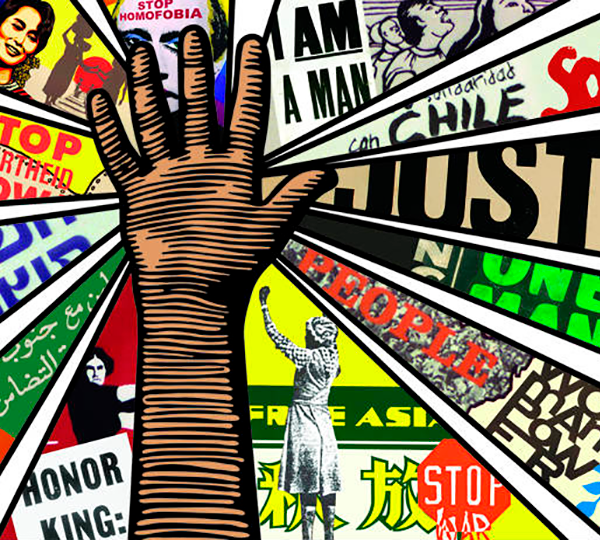
“Awoken” from the National Center for Civil and Human Rights


This comment has been removed by the author.
ReplyDeleteI liked the style that you took with your blog Nanki Kaur and its self-reflective, yet socially critical tone. But I think I must disagree with two of your statements: first, there are those without power and second, the power is not in the masses. Of course, I may be thinking somewhat optimistically (and possibly naively) but I like the notion that all people have a certain threshold of power. To understand this, we must narrow down the scale of relevance (although, it is important to appreciate large-scale trends of power) and look at the power of the individual. Yes, there may be social pressures that impact a person and can diminish their “power” but every single individual maintains power over themselves. Whether this be power over their reactions, emotions, or thoughts, every individual has the power to control these aspects of themselves. Now, it may seem marginal and it is easy to be critical with arguments like indoctrination or pressure, but these outside factors do not take away from people’s privacy over their own minds and the power that has. It is this individual power that recognizes hardships and starts rebellions. It is this power that we have over our own minds that dictates how we view and interact with the world around us. This individual power we have over ourselves is a beautiful aspect of human nature that shouldn’t be discounted because it is a less evident form of power that people have. This then translates to the masses. For example, the president. For as much as the government may be corrupt and try to diminish and divide the people’s power, the president is just one man. One single person. He is not a president without a country. And he is not a president without a people. We put him into office and if truly collected, I do not doubt our ability to take him out. We can see this in events like the French Revolution where the people rebelled and completely over through the monarchy. Despite now we are now used to the norms of power, the masses still have this ability. I cannot fully develop my argument in this comment but I hope you get the idea. Good job!
ReplyDeleteHello Nanki. I can relate to the desire to be taller since I have always believed the more physically bigger one is, the more power one holds. After all, children are often belittled because they are small and cute and all I wanted was to be taken seriously by the adults. Due to my insecurities, I still hold onto that belief. However, as you mentioned, that power can change forms it is not just one concrete idea. I loved how you introduced the idea of how strength is in numbers, and then proceeded to disprove that notion with powerful actions done by a singular person. I believe that power is the ability to influence others since the word influence is fluid and can fit into different containers. Since power is not just the possession of one tangible object, maybe slowly I could destroy the idea that having different phenotypes will give me the respect I want. I loved how you ended the blog with a question that the readers can interact with. After you focused onto talking directly to the audience and comforting them which engaged the reader. Thank you for writing, this blog was an eye-opening read.
ReplyDeleteHi Nanki! I really appreciated your writing style in this piece, specifically your varying sentence structure and use of rhetorical questions. I think you make a really important point in that power is hard to get but easy to abuse. Similarly, I shared this belief that being physically taller made one more powerful, using that to explain why boys were often more respected than girls. I like how you prove that power is easily manipulated by using examples like police brutality, child abuse, tyrannical governments, and racial tensions. Each of these serves as a way for us to view power dynamics. I agree with Galilea in that your writing style interacts with and speaks directly to the reader, it made this a very personal and self-reflective read. Ending with the parallel of Spiderman made your blog extra powerful and memorable. Thank you for sharing!
ReplyDelete